
 English
 Español
 Pусский
 العربية
inspection quadruped robot
Inspection Quadruped Robot: A Versatile Solution for Industrial and Hazardous Environments Inspection quadruped robots are advanced robotic systems designed to navigate complex terrains and perform detailed inspections in challenging environments. These four-legged robots combine the agility of legged locomotion with the stability of a quadrupedal design, making them ideal for industrial, construction, and hazardous site inspections where traditional wheeled or tracked robots may struggle. Key Features and Capabilities 1. Adaptive Mobility – Unlike wheeled robots, quadruped robots can traverse uneven surfaces, stairs, rubble, and confined spaces with ease. Their dynamic gait allows them to adjust leg movements in real time, ensuring stability on slippery or unstable ground. 2. High-Payload Sensors – Inspection quadrupeds are equipped with a range of sensors, including high-resolution cameras, LiDAR, thermal imaging, and gas detectors. These sensors enable real-time data collection for structural integrity checks, leak detection, temperature monitoring, and more. 3. Autonomous and Remote Operation – Many models support both autonomous navigation and remote control. Operators can guide the robot via a wireless interface while AI-driven obstacle avoidance ensures safe movement in cluttered environments. 4. Durability and Resilience – Built to withstand harsh conditions, these robots often feature waterproof and dustproof designs, allowing them to operate in extreme temperatures, chemical exposure zones, or disaster-stricken areas. 5. Long Battery Life – Efficient power management systems enable extended mission durations, with some models supporting hot-swappable batteries for continuous operation. Applications - Industrial Inspections – Quadrupeds can inspect pipelines, storage tanks, and machinery in oil refineries, power plants, and manufacturing facilities, reducing human exposure to dangerous environments. - Infrastructure Assessment – They assess bridges, tunnels, and construction sites for cracks, corrosion, or structural weaknesses. - Disaster Response – In disaster zones, these robots can search for survivors, assess damage, and detect hazardous materials without risking human lives. - Nuclear and Chemical Facilities – Their ability to operate in high-radiation or toxic environments makes them invaluable for maintenance and safety checks. Advantages Over Traditional Robots - Superior Maneuverability – Legged robots outperform wheeled or tracked systems in rough terrain. - Minimal Infrastructure Modification – Unlike drones, they don’t require open space and can inspect indoor and underground areas. - Enhanced Data Accuracy – Stable movement ensures high-quality sensor readings compared to flying drones. Future Developments Future inspection quadrupeds may integrate advanced AI for predictive maintenance, swarm coordination for large-scale inspections, and improved energy efficiency for longer deployments. In summary, inspection quadruped robots represent a cutting-edge solution for autonomous inspections in hazardous and hard-to-reach locations, improving safety, efficiency, and data accuracy across multiple industries.
Produit
Catégorie:
-
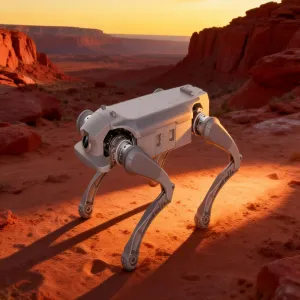
Wheeled Medium-Sized Quadruped Robot – Hybrid Industrial Robot Dog for Inspection & Security
Leur classification: Veneer DryerVues: 23Numéro:Temps de libération: 2025-12-26 15:39:15Wheeled Medium-Sized Quadruped Robot – Hybrid Industrial Robot Dog for Inspection & Security -
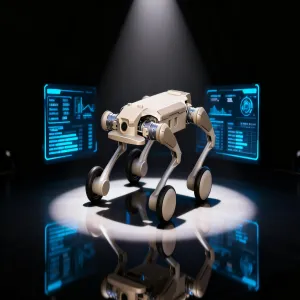
Wheeled Medium-Sized Quadruped Robot – All-Terrain Hybrid Mobility for Warehouse & Yard Logistics
Leur classification: Veneer DryerVues: 25Numéro:Temps de libération: 2025-12-26 16:37:26Wheeled Medium-Sized Quadruped Robot – All-Terrain Hybrid Mobility for Warehouse & Yard Logistics -
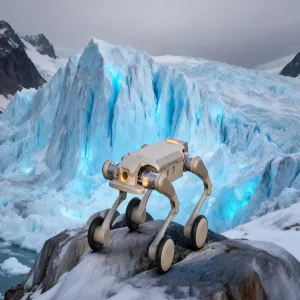
Wheeled Medium-Sized Quadruped Robot – Ruggedized for Construction Site Monitoring & Safety Patrol
Leur classification: Veneer DryerVues: 27Numéro:Temps de libération: 2025-12-26 16:40:24Wheeled Medium-Sized Quadruped Robot – Ruggedized for Construction Site Monitoring & Safety Patrol -
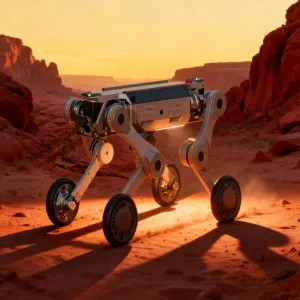
Wheeled Medium-Sized Quadruped Robot – Rapid Deployment Solution for Emergency Response Scenarios
Leur classification: Veneer DryerVues: 23Numéro:Temps de libération: 2025-12-26 17:05:11Wheeled Medium-Sized Quadruped Robot – Rapid Deployment Solution for Emergency Response Scenarios -
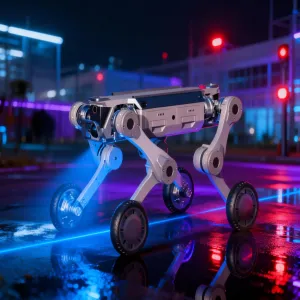
Wheeled Medium-Sized Quadruped Robot – Open-Source SDK for Advanced Research and Custom Development
Leur classification: Veneer DryerVues: 39Numéro:Temps de libération: 2025-12-26 17:17:04Wheeled Medium-Sized Quadruped Robot – Open-Source SDK for Advanced Research and Custom Development -
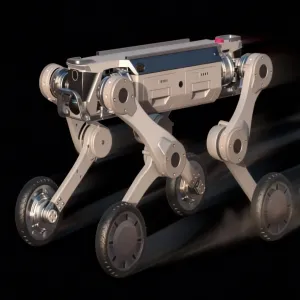
Wheeled Medium-Sized Quadruped Robot – Intuitive Teleoperation and Waypoint Planning Interface
Leur classification: Veneer DryerVues: 49Numéro:Temps de libération: 2025-12-26 17:18:42Wheeled Medium-Sized Quadruped Robot – Intuitive Teleoperation and Waypoint Planning Interface
Actualités
Catégorie:
Aucun résultat de recherche!
Affaire
Catégorie:
Aucun résultat de recherche!
Vidéo
Catégorie:
Aucun résultat de recherche!
Téléchargement
Catégorie:
Aucun résultat de recherche!
Recrutement
Catégorie:
Aucun résultat de recherche!
Produits recommandés
Aucun résultat de recherche!




 Téléphone